Protein Techniques
Breaking Down a Chicken for Weeknight Cooking
Fastest practical breakdown method for roasting, frying, curries, and shredded prep with minimal waste.
- Chicken-based weeknight meals and quick curries.
- Roulades, stocks, and shredded chicken recipes.
- Recipes that need both dark and white meat portions.
Step 1
Work clean and efficient
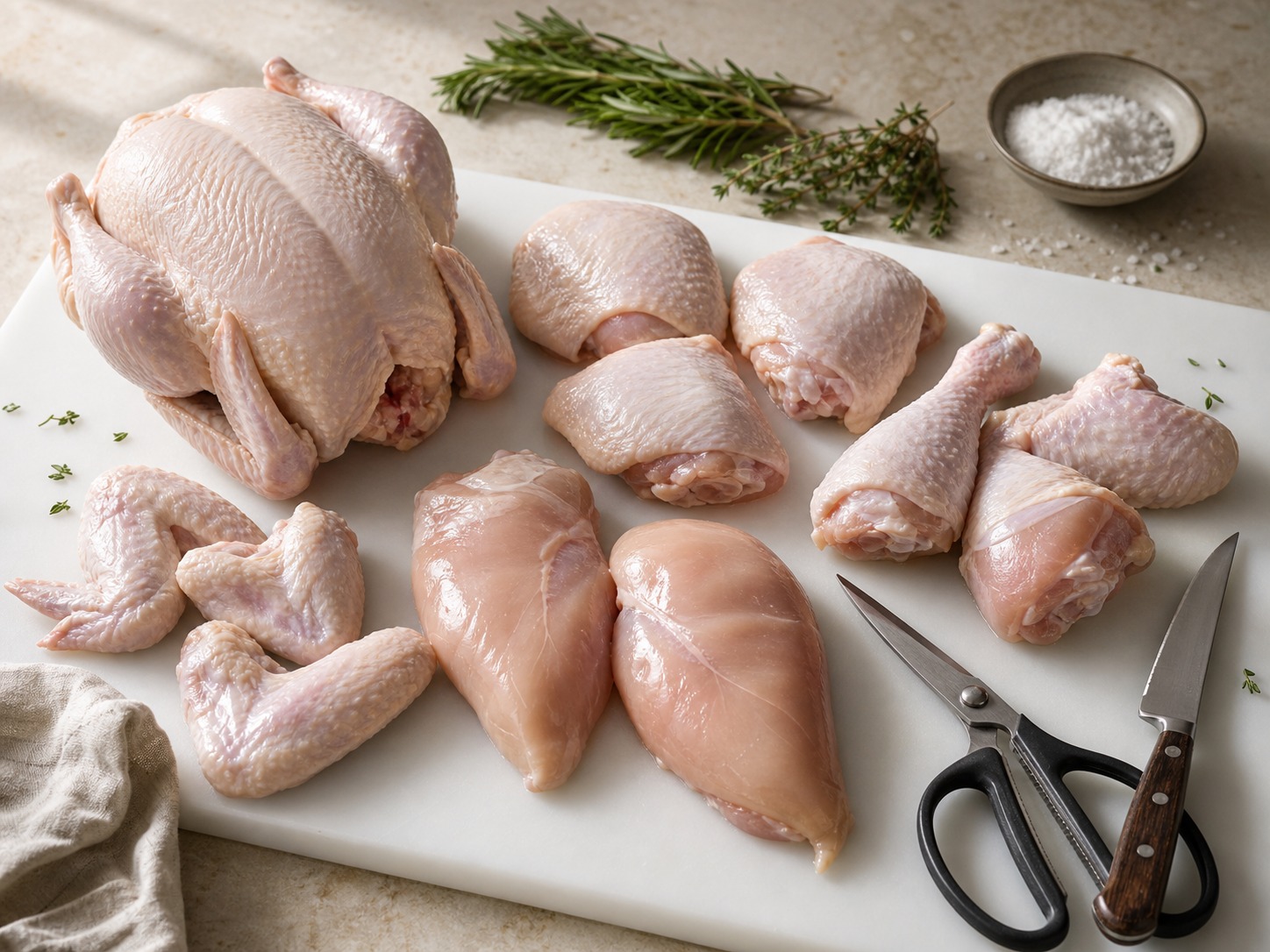
Keep chicken cold and dry before cutting. A cold surface firms connective tissue and reduces tearing. Keep a dedicated board and sharpened knife ready before opening the package.
If the goal is speed, don’t skip the prep sequence. A tidy station prevents wasted minutes and keeps the final pieces uniform for more predictable cooking.
Step 2
Separate by bones first
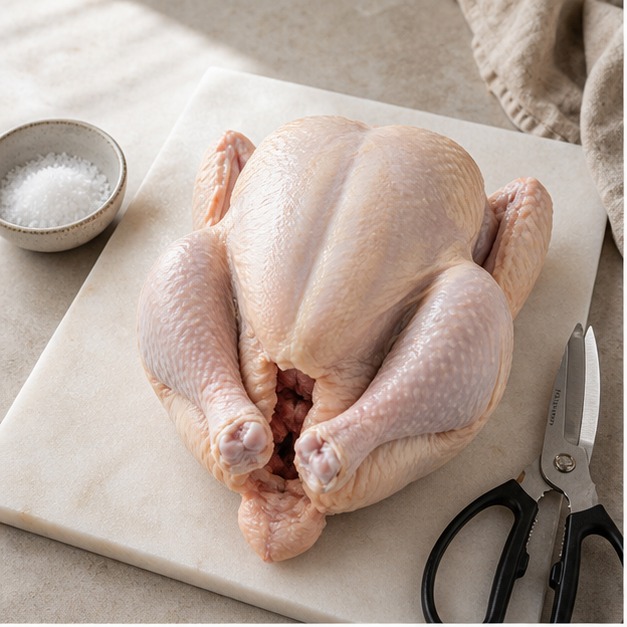
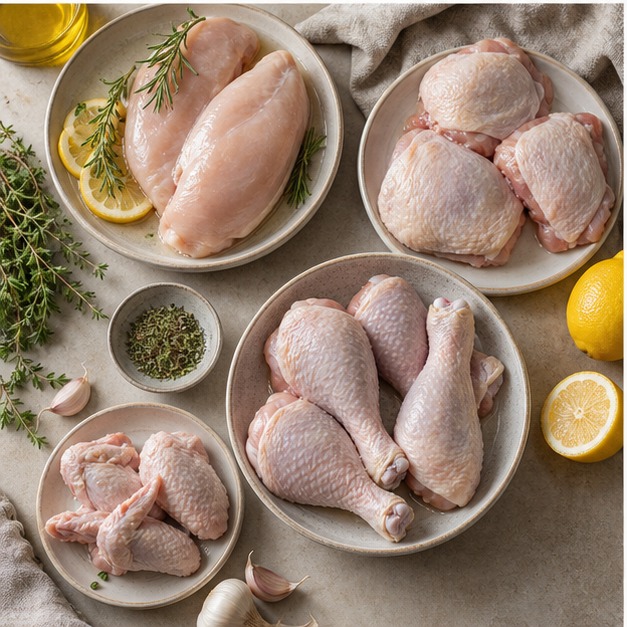
Create breast, thighs, and wings as separate cuts with natural seams. Separate the back and joints in one pass to avoid extra breaks and avoid crushing the meat around the breastbone.
Bone removal is easier if you follow the joint hinge and cut slightly toward the centerline rather than through the flesh plane.
Step 3
Split for the intended cook
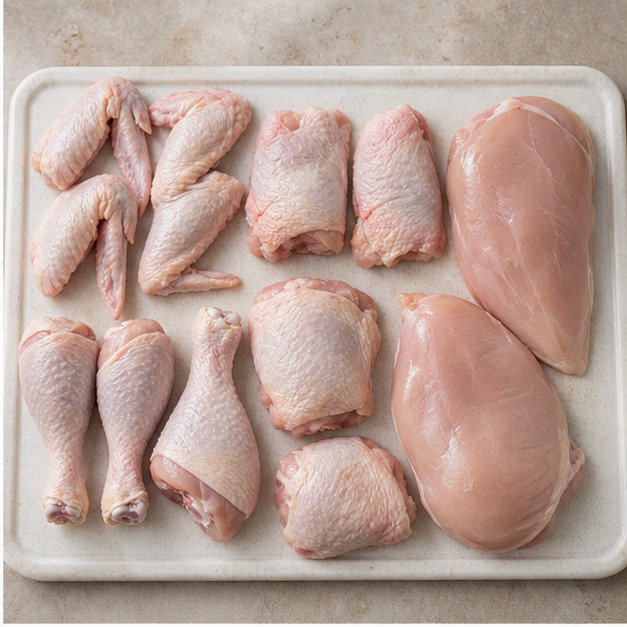
If a recipe needs quick pieces, keep thighs and legs in larger chunks and reserve breast portions thinner to avoid dryness. If you need shredding, leave the breast on bone only if you are roasting first; it holds moisture.
Use skin-on options for quick sears where crispness is part of the flavor design.
Step 4
Store and repurpose immediately
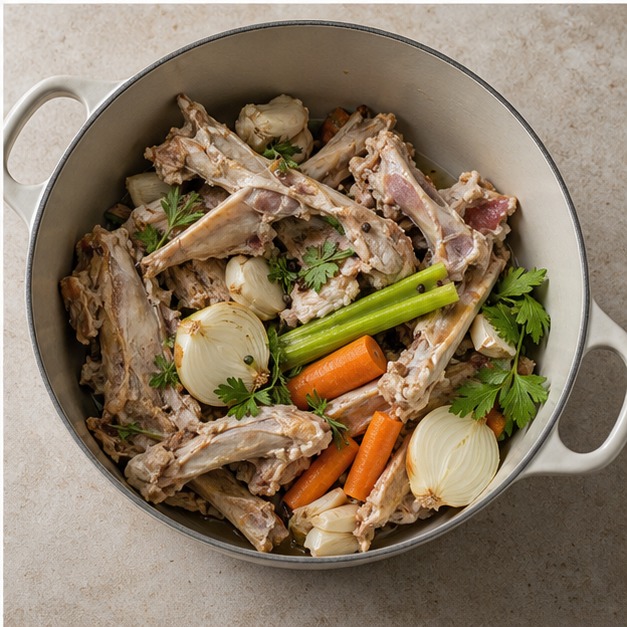
Keep scraps and skin separate for broth, crisps, and stock-rich sauces. A clean breakdown naturally creates subcomponents that should be routed to specific tasks within your recipe plan.
Small internal linking win: if a recipe needs stock, this technique note can point to the stock and braising pages so users see the full sequence, not isolated tips.