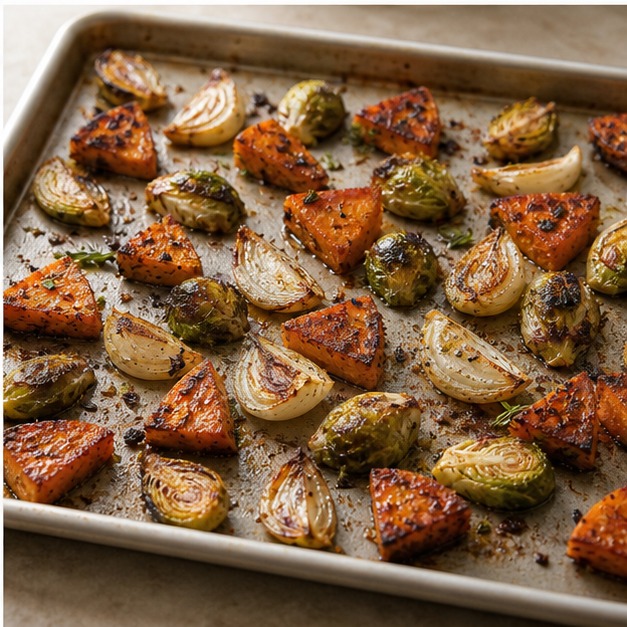
Vegetable Techniques
Roasting Vegetables Without Steaming Them
Why oven-roasted vegetables can taste dry on the outside and soggy inside, and how heat, air flow, and spacing solve it every time.
- Sheet-pan vegetables, roasted potatoes, and root veg sides.
- Crisp vegetable toppings for sandwiches, bowls, and grain dishes.
- Troubleshooting under-roasted centers or soggy skins.
Step 1
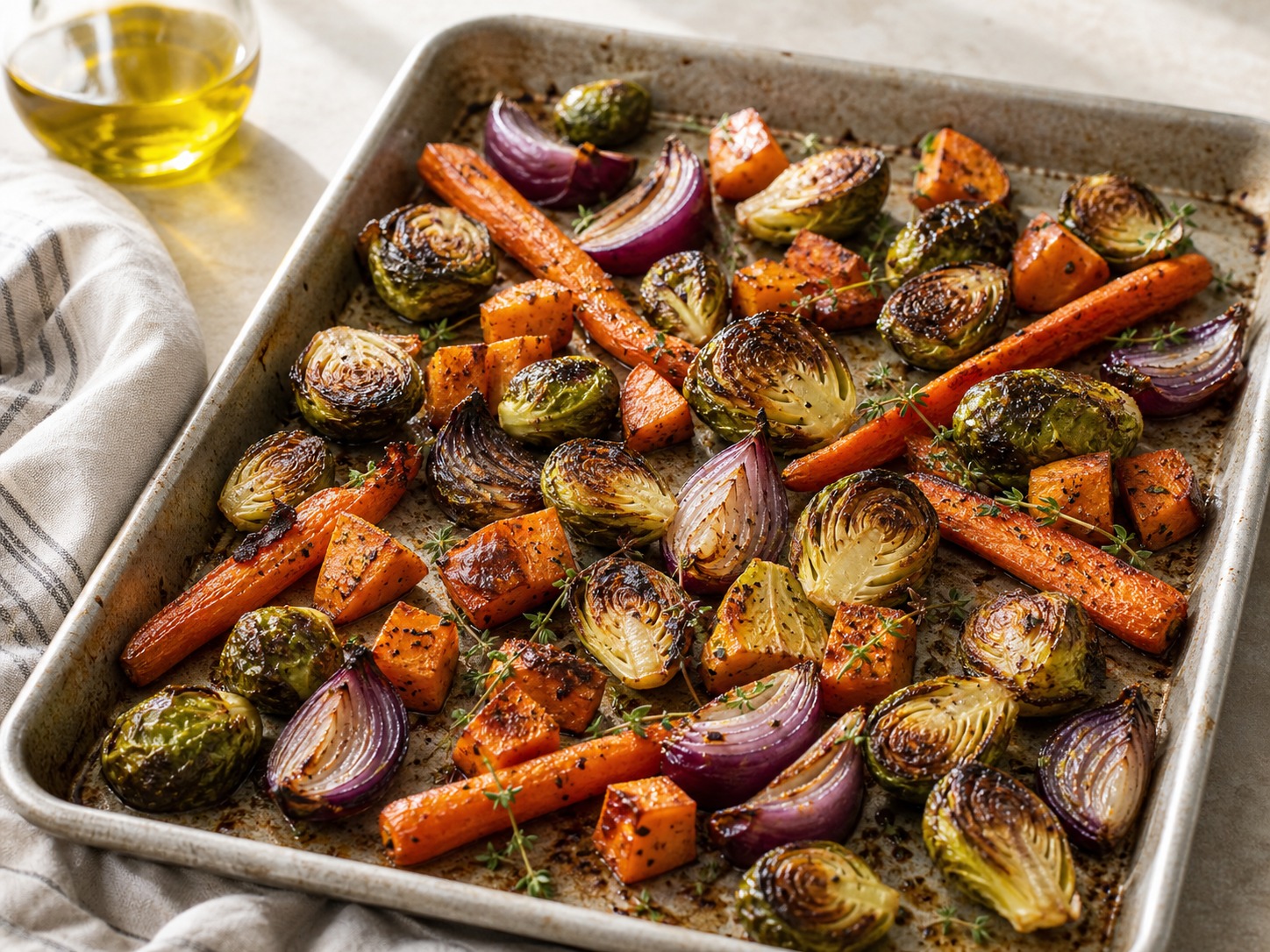
Start with moisture reduction
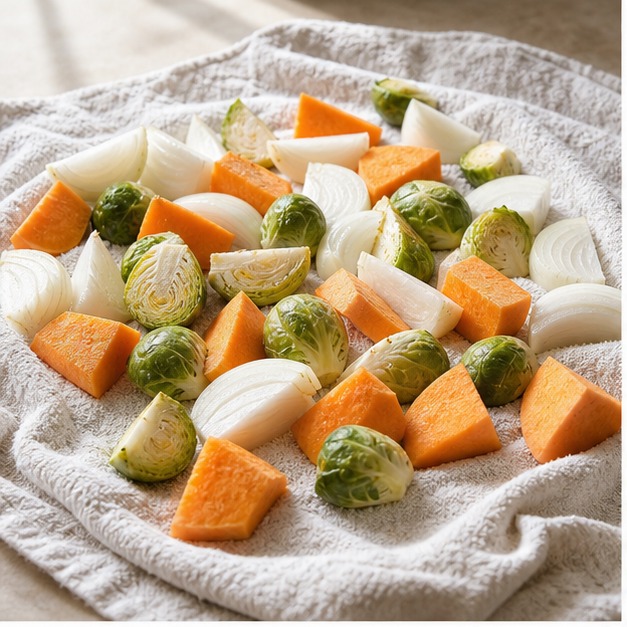
Roasting fails when vegetables bring too much surface moisture into a hot pan. Patting vegetables dry before they touch the oven removes that steam source and helps contact happen at the cell level where browning happens.
A dry surface is not cosmetic. It creates the low-moisture condition needed for caramelized edges instead of a soft, steamy coating.
Step 2
Heat intensity and tray geometry
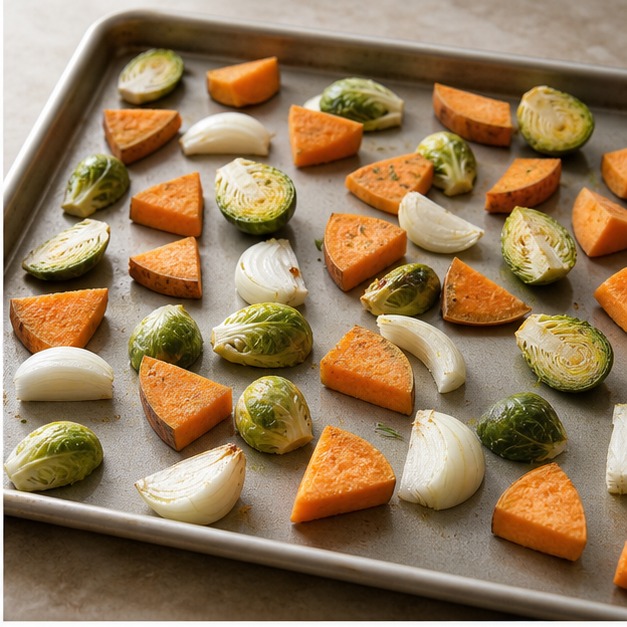
Use a hot oven (220 to 245°C / 425 to 475°F) for dense vegetables and a little less for soft alliums and squash. Preheated ovens and metal sheets help the bottom of the vegetables catch heat quickly before the steam builds.
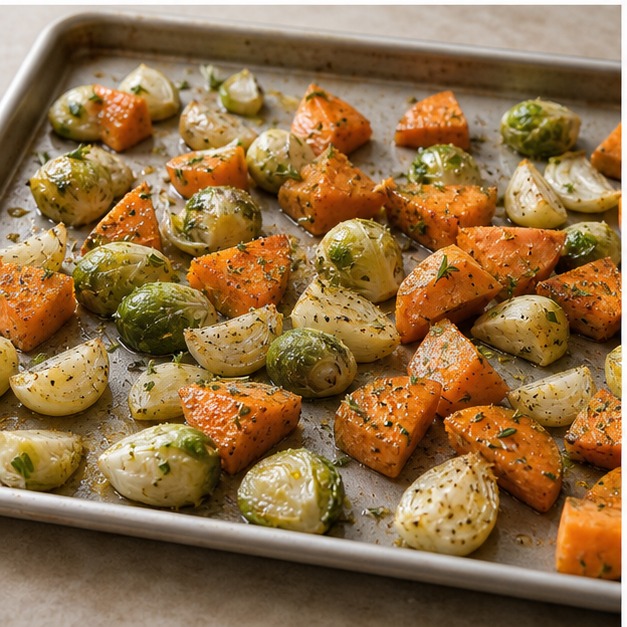
A single-layer tray with room to breathe keeps pieces from steaming. Crowding means one piece gives up moisture into its neighbors, and no piece can brown.
Step 3
Seasoning schedule and surface oiling
Salt early if you want maximum seasoning, but hold too much salt for the very end if you are fighting moisture release on thin-cut produce. For harder vegetables, a light pre-salt is fine when paired with vigorous air flow.
Oil should be enough to coat lightly. Heavy oiling traps heat unevenly and can create hard exterior layers before the center cooks.
Step 4
Finish with carryover and carry-forward
Large batches need a final two-minute blast and a rest. If you stop roasting early, carryover heat can continue to finish the center, while resting prevents over-browning from residual heat.
Pair the same tray philosophy in recipe pages. If roasted vegetables link directly to soups, salads, and bowls, users should see consistent temperature and timing logic there too.