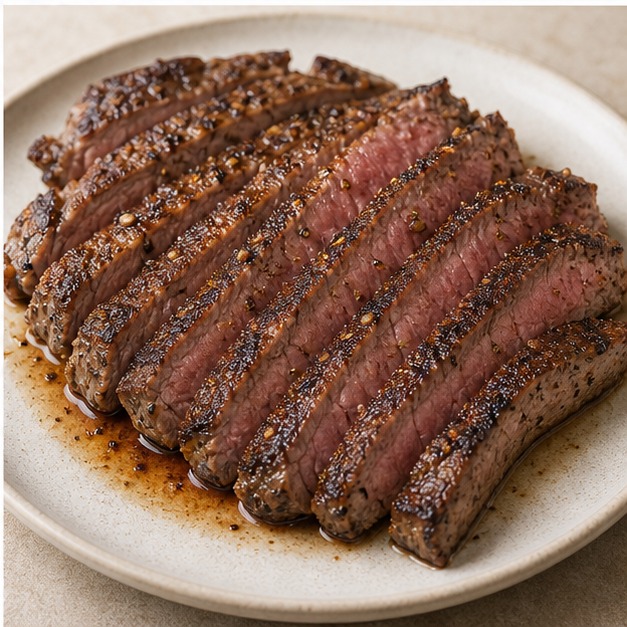
Heat Control
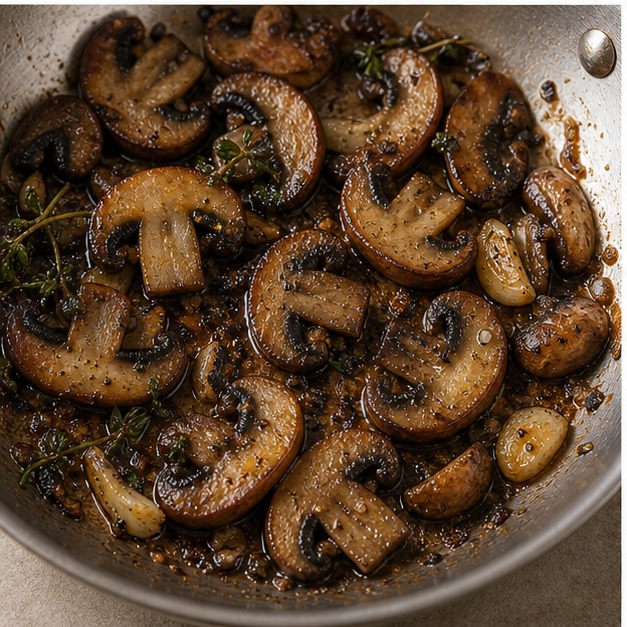
Browning, Maillard Reactions, and Heat Control
Understand why browning improves flavor and what to change when surfaces burn or stay pale.
- Steaks, grilled breads, roasted proteins, and onions.
- Pan sauces that require strong browned notes.
- Recipes where color is a quality indicator.
Step 1
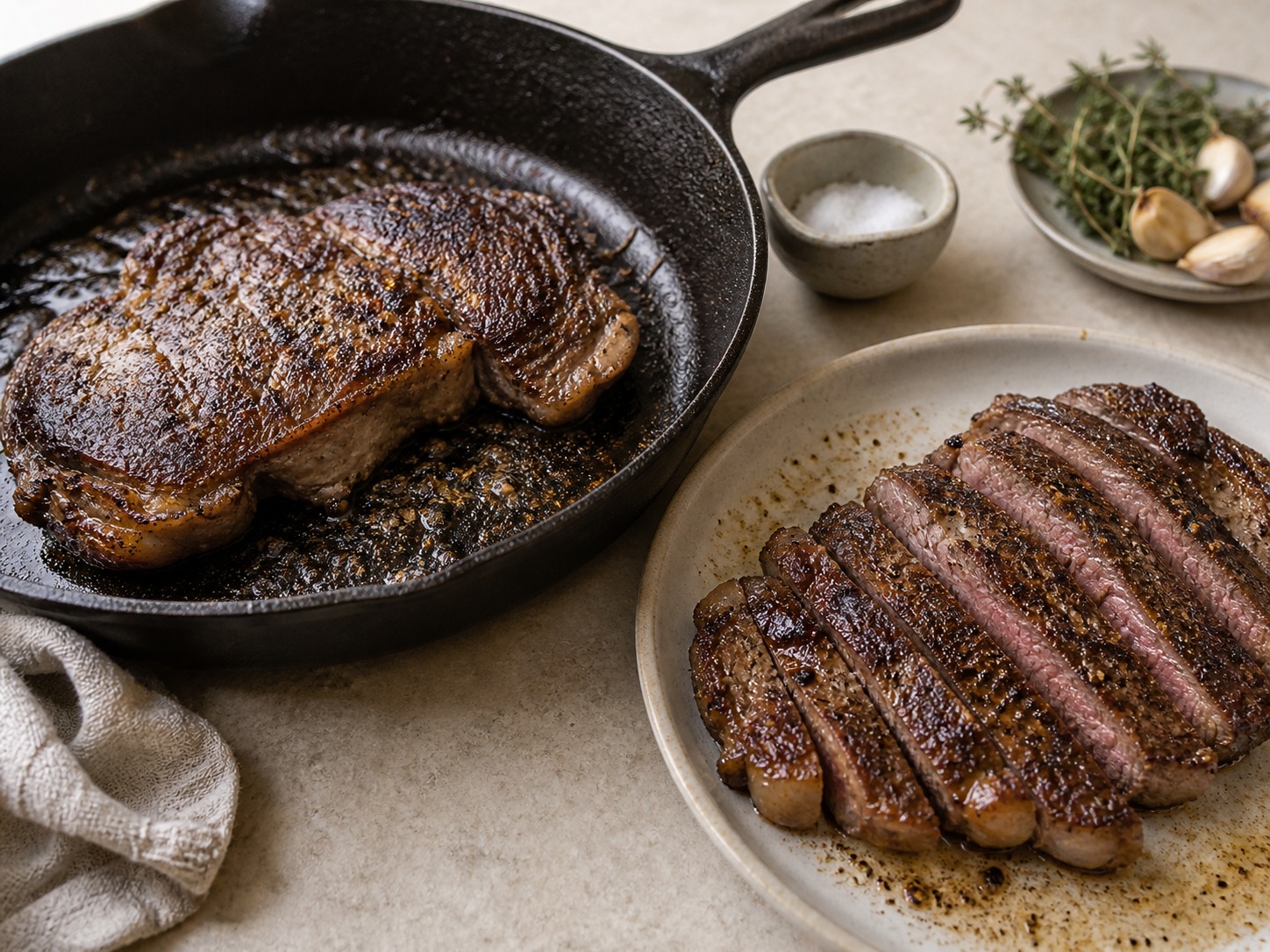
Set the browning ceiling
Browning happens when protein and sugar chemistry catches up with heat long enough for aroma formation. Too cool and there is no Maillard; too hot and sugars burn into bitterness.
That means your target is not simply “high heat” but controlled heat across the contact surface.
Step 2
Dryness and salt timing
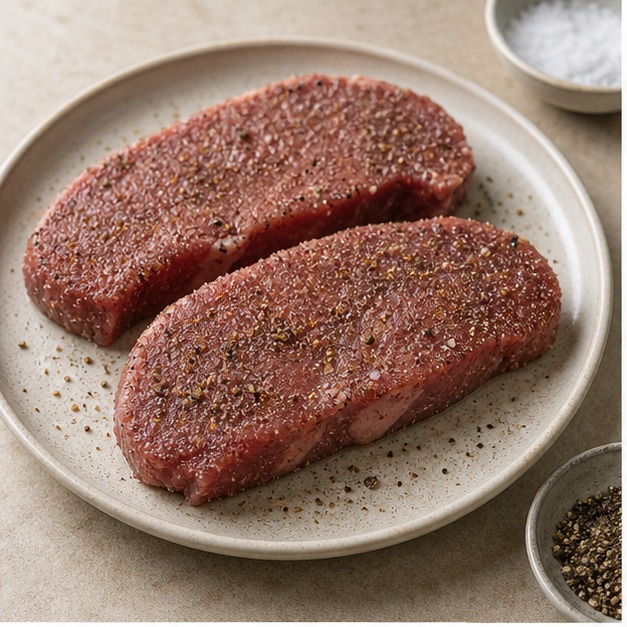
Surface water delays browning because energy goes into evaporation before chemistry. Dry, seasoned surfaces brown more consistently because the heat first drives color formation.
Timing salt earlier helps draw and release moisture. Pat excess surface moisture before searing when you want color over speed.
Step 3
Pan selection and crowding
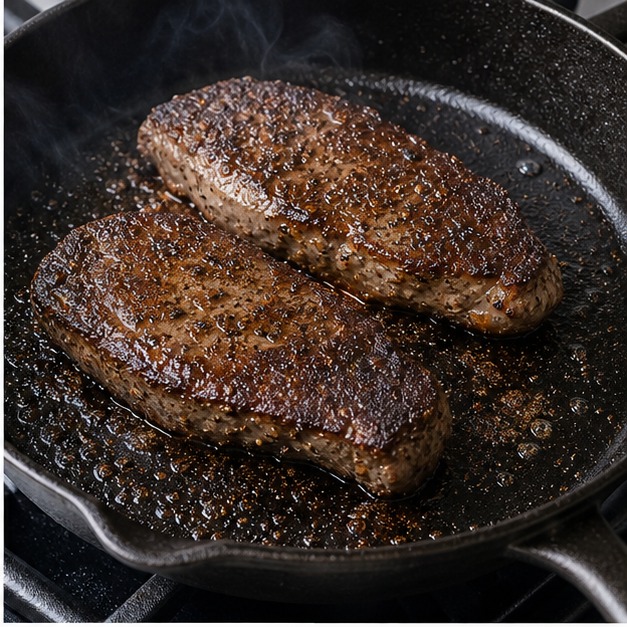
Carbon steel and cast iron radiate and hold heat better than thin aluminum pans. If you need color, use a pan that can recover from high contact demand.
Avoid overcrowding. Contact must stay active; stacked proteins steam and stall browning.
Step 4
Heat map to recipe-level SEO
When adding this to recipe pages, mention a practical checkpoint: no color in 60 to 90 seconds for thin proteins means pan temperature, not seasoning, is the issue.
Cross-link from related techniques and protein pages so users understand this is a repeatable method, not an isolated trick.