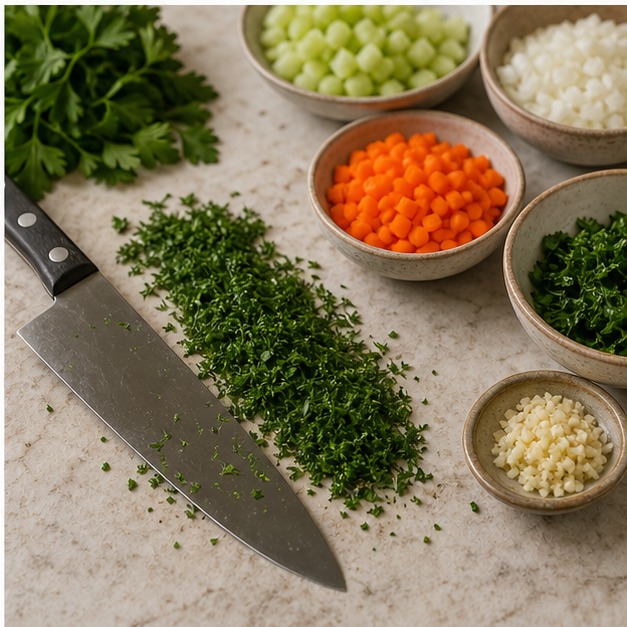
Prep Fundamentals
Knife Skills That Change Cooking Time
Use cut size and orientation to control heat transfer, finishing, and moisture loss.
- Sauté dishes, roasts, stir-fries, and sheets.
- Recipes with timing steps that vary by size perception.
- Batch prep for predictable texture across multiple portions.
Step 1
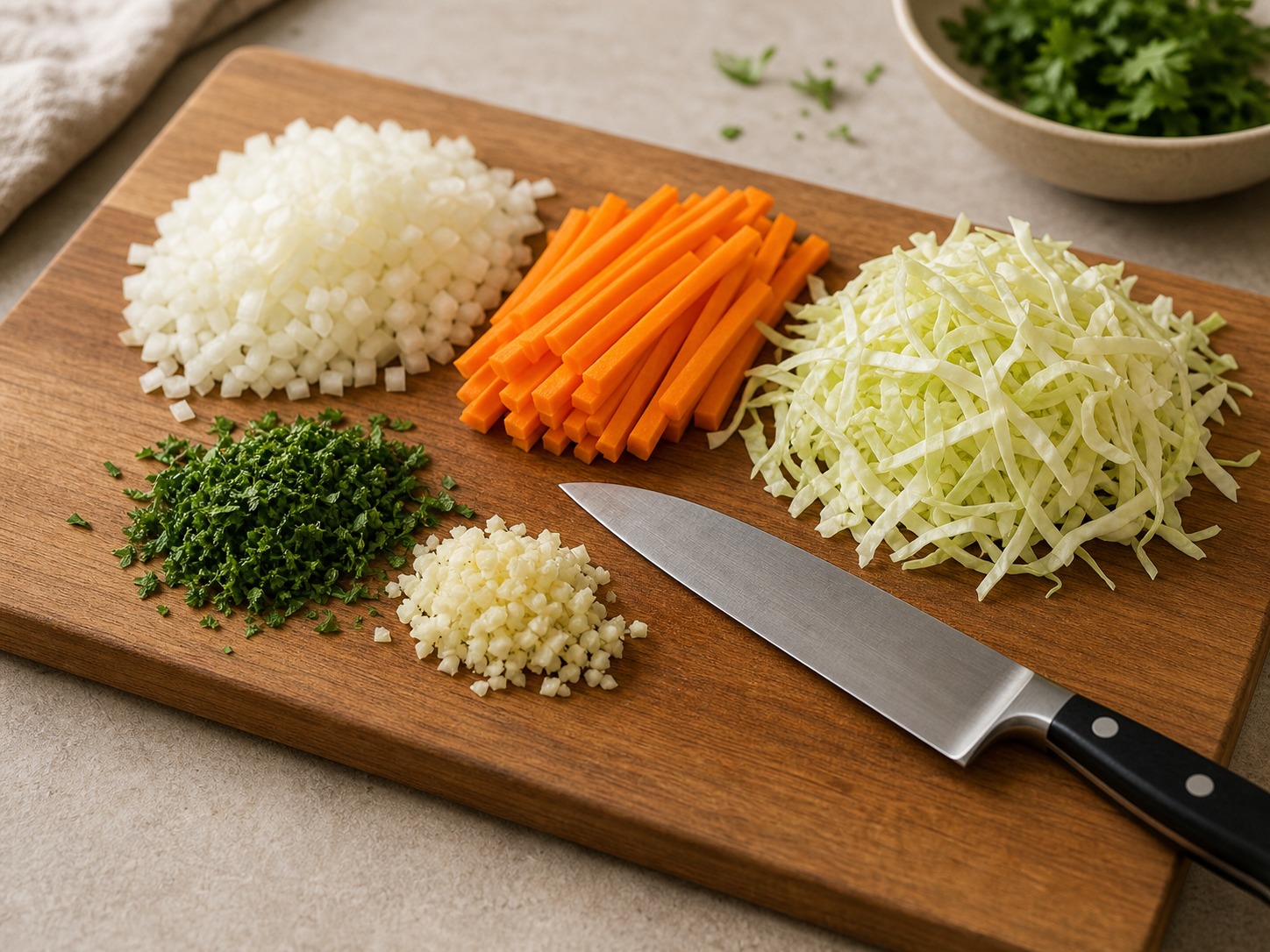
Uniformity is a time multiplier
The size variance in a cutting board is the silent cause of under- and overcooked bites. Uniformity is not appearance work; it is process control.
If one batch has mixed sizes, the oven or pan will process edges and center at different rates.
Step 2
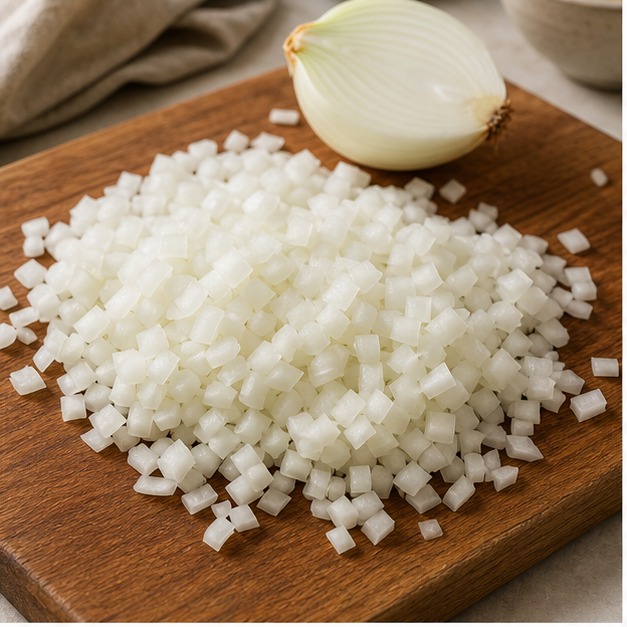
Direction influences texture
Fiber direction and cut angle affect bite resistance and final water loss. Cut across fibers for tenderness; keep some thicker grain when texture is needed.
A prep note with direction language helps readers apply the method in protein and vegetables.
Step 3
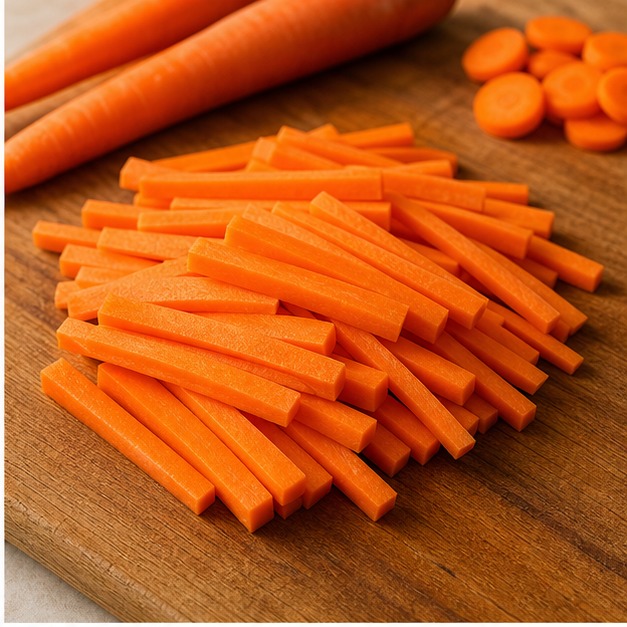
Batching for heat staging
Knife prep should match cooking heat cycles. Keep faster-cooking thin pieces apart from denser cuts to avoid constant adjustment at the stove.
Small batching improves not just timing but also food quality because you can stage by cooking speed.
Step 4
Cross-link back to recipe notes
If this is in the recipe ecosystem, each technique-reliant recipe should mention cut size expectations in ingredients or prep steps.
Internal links back to this page create consistency: same rule, same terminology, more reliable cook outcomes.