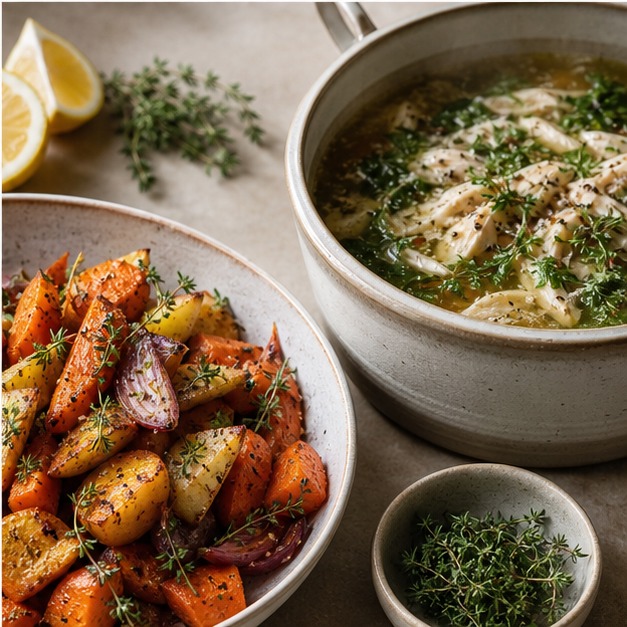
Flavor Foundations
Seasoning Food Properly
How salt timing, surface moisture, acidity, and fat change the way food tastes before it ever reaches the table.
- Chicken, steak, fish, beans, soups, and roasted vegetables.
- Recipe notes that say season in layers or season to taste.
- Troubleshooting bland food even when enough salt seems to be present.
Step 1
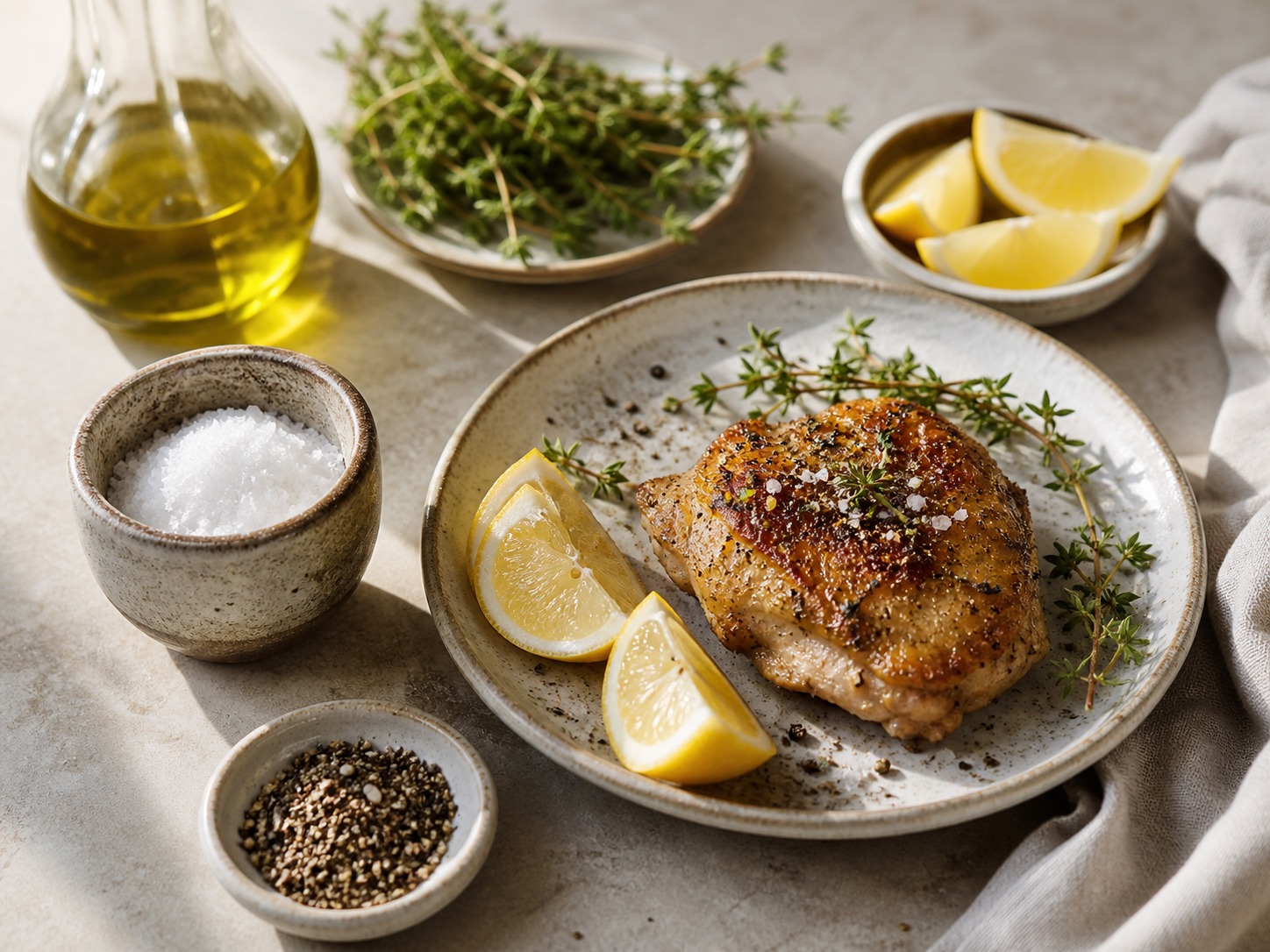
Salt needs time and water
When I season early, I am not just trying to make the outside salty. Salt moves through food by dissolving in surface moisture and diffusing inward. Salt sprinkled on a chicken thigh one minute before cooking mostly seasons the outside. Salt added earlier has time to move past the surface and change how the meat holds moisture.
For small foods, a few minutes can matter. For thick meat, beans, or vegetables with dense structure, earlier seasoning gives a more even result.
Step 2
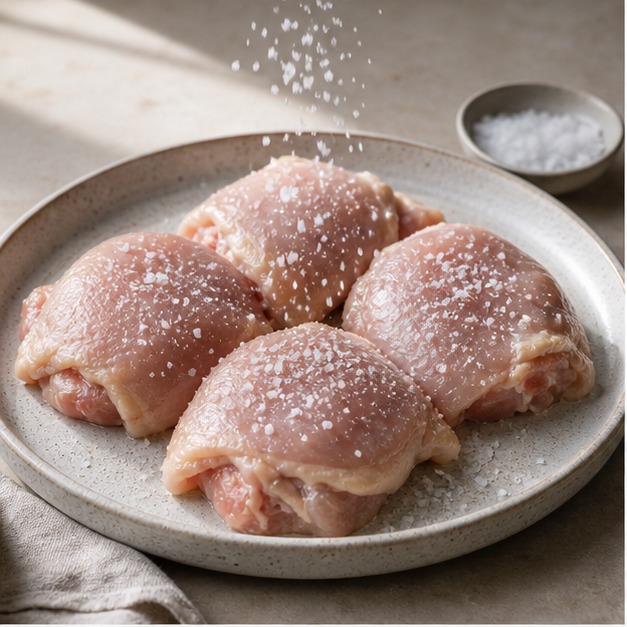
Seasoning is not only salt
Salt makes flavors easier to perceive, but it does not fix every problem. Acid can make a rich dish feel brighter. Fat can carry aroma and soften harsh edges. Sugar can balance bitterness or aggressive acidity. Heat can wake up food that tastes flat but already has enough salt.
The tasting question I come back to is not just whether the food needs salt. I ask whether it needs brightness, richness, sweetness, bitterness, or heat.
Step 3
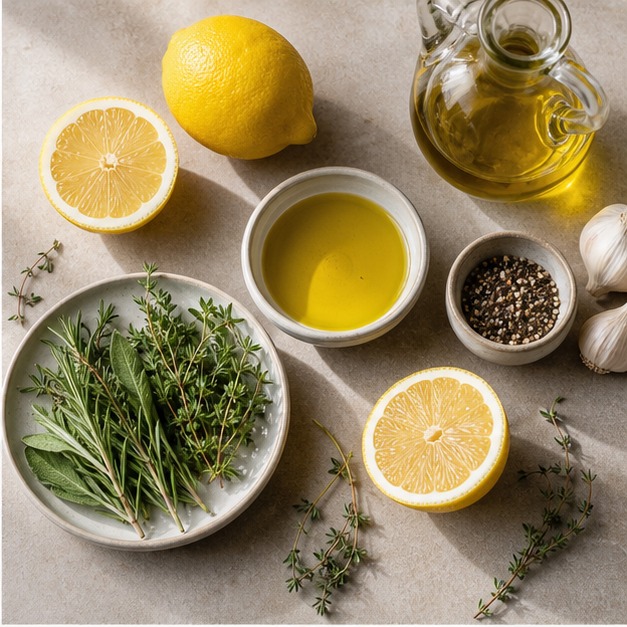
Surface moisture changes browning
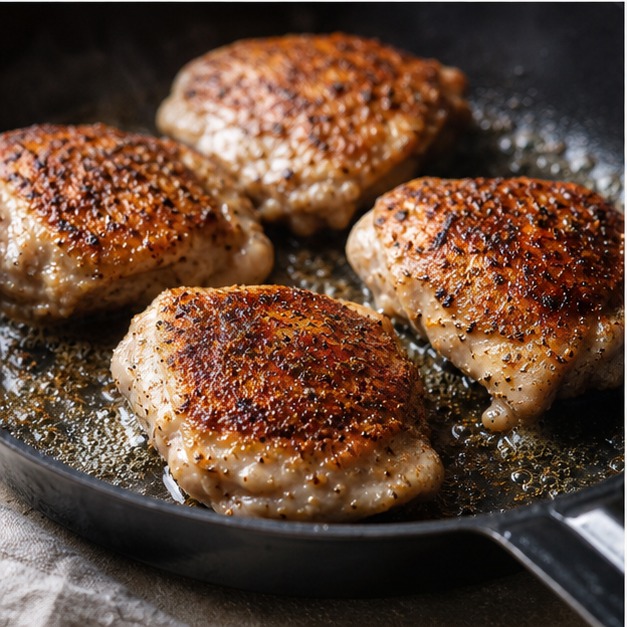
Salt can pull moisture to the surface before that moisture is reabsorbed or evaporates. If you salt meat and immediately sear it while the surface is wet, browning slows down because water must boil away first.
For better browning, I either salt right before cooking or salt earlier and give the food time to dry on the surface. Patting dry is not cosmetic; it changes the heat path.
Step 4
Season in layers when food has layers
Soups, braises, and skillets taste better when seasoning is adjusted as ingredients are added. Aromatics, liquid, starch, protein, and final garnish all dilute or redirect flavor.
The final taste should still happen at the end. Reduction, cheese, olives, soy sauce, miso, lemon, and herbs can all move the balance after the main cooking is done.