Dough and Baking
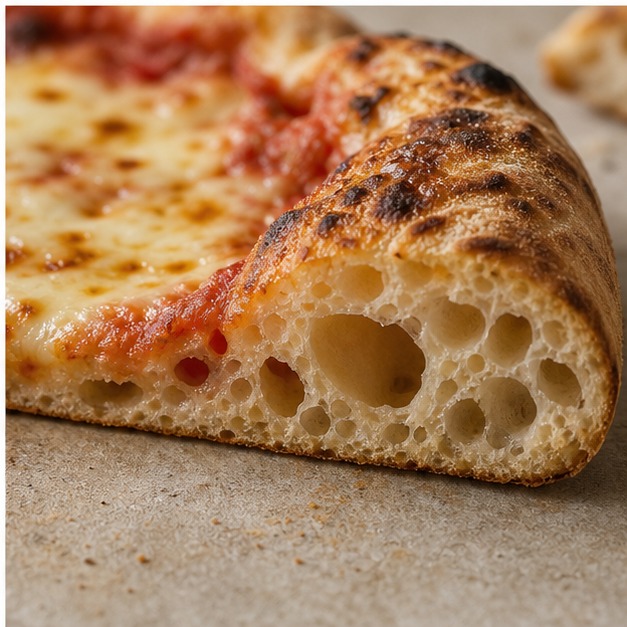
Dough Hydration and Pizza Texture
How water percentage changes dough handling, gluten development, browning, chew, and the kind of pizza crust you end up with.
- Pizza dough instructions that mention water percentage or tackiness.
- Flatbread, focaccia, bread, and enriched dough notes.
- Troubleshooting sticky dough, dense crust, or pale browning.
Step 1
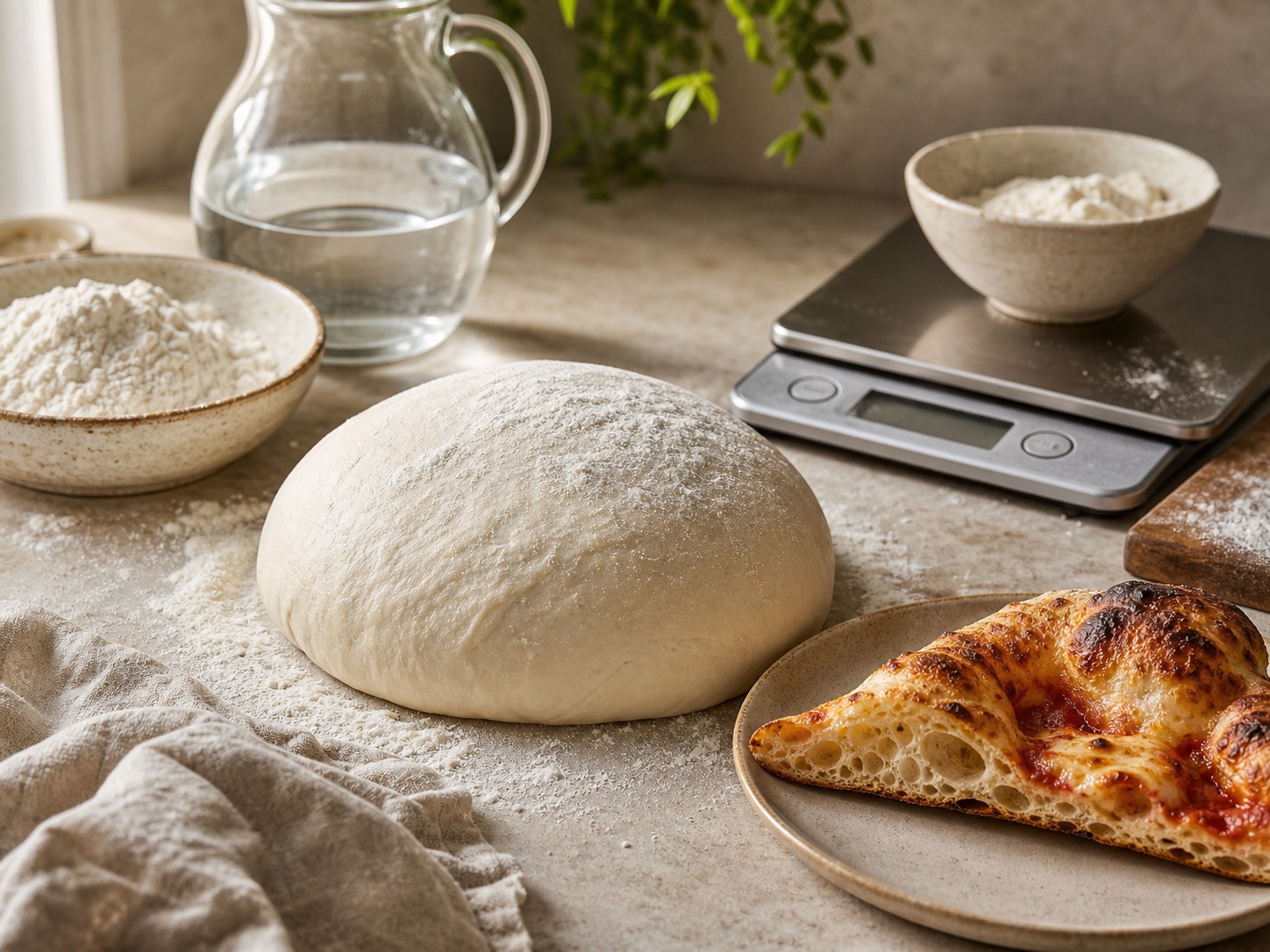
Hydration is a ratio, not a mood
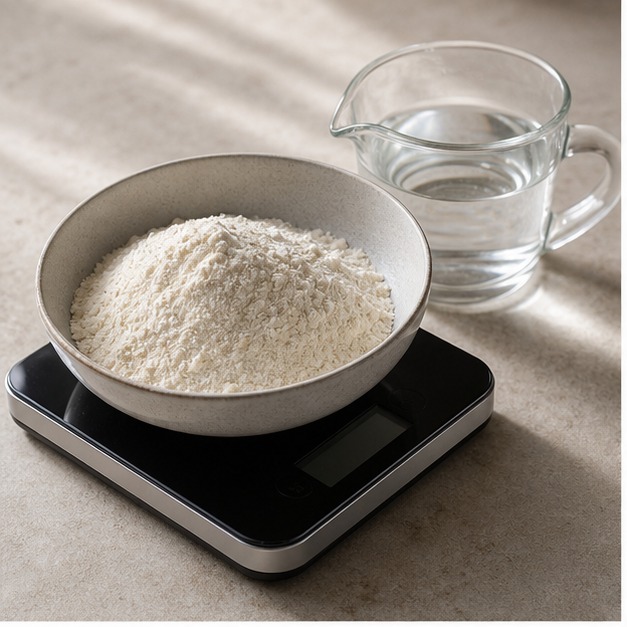
When I talk about hydration, I mean water weight divided by flour weight. A dough with 700 grams of water and 1000 grams of flour is 70 percent hydration. That ratio matters more than the cup measurement because flour volume changes with packing, humidity, and brand.
I use hydration as a texture dial. Higher hydration gives starches and proteins more room to move, so gluten can stretch farther and fermentation bubbles can expand more easily. Lower hydration gives a tighter dough that is easier to shape but usually bakes denser.
Step 2
What changes as hydration rises
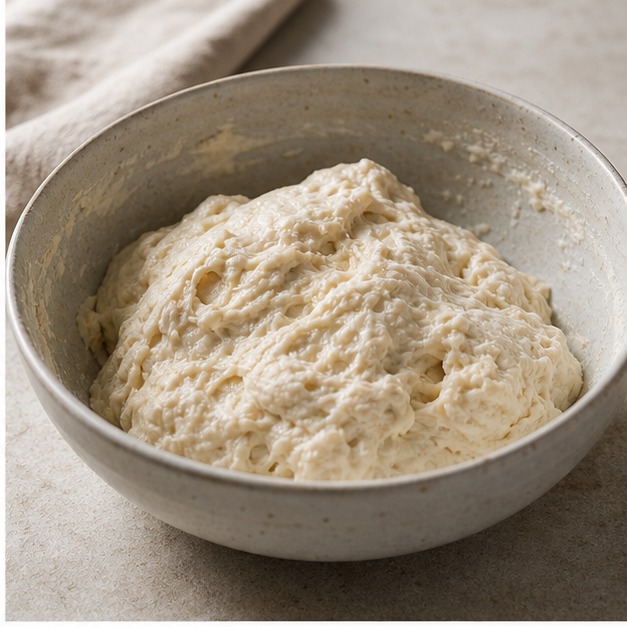
At roughly 55 to 60 percent hydration, dough feels firm and predictable. It is useful for some pan pizzas, crackers, and doughs that need sharp shaping. Around 62 to 68 percent, many pizza doughs become extensible without turning soupy. Above 70 percent, the dough can produce a lighter crumb, but it asks for gentler handling and more time.
I do not treat wet dough as automatically better. It can collapse if it is underdeveloped, tear if handled aggressively, or stick if the bench is over-floured and then rehydrated unevenly. The useful target is the one that fits the flour, fermentation time, and cooking method.
Step 3
Flour strength sets the ceiling
Protein content changes how much water a dough can hold. Strong bread flour can usually support more hydration because it forms a stronger gluten network. Lower-protein all-purpose flour may make a softer dough at the same water percentage.
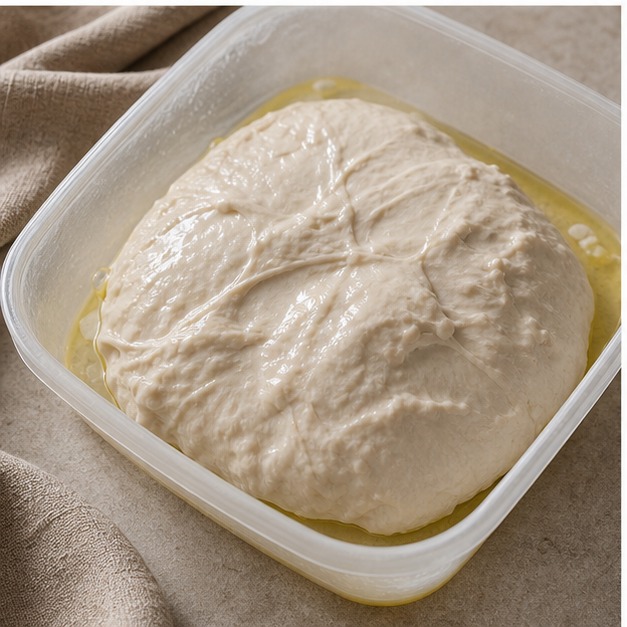
If a recipe uses a high hydration and your dough puddles instead of stretching, the flour may not be strong enough, the dough may need folds, or fermentation may have run too long.
Step 4
How to adjust without guessing
I change hydration in small steps. A two percentage point increase is often enough to feel different. For 500 grams of flour, that is only 10 grams more water.
If I am using unfamiliar flour, I hold back a small amount of water at first. Once the dough has mixed and rested, I add more only if it feels tight and tears before stretching.