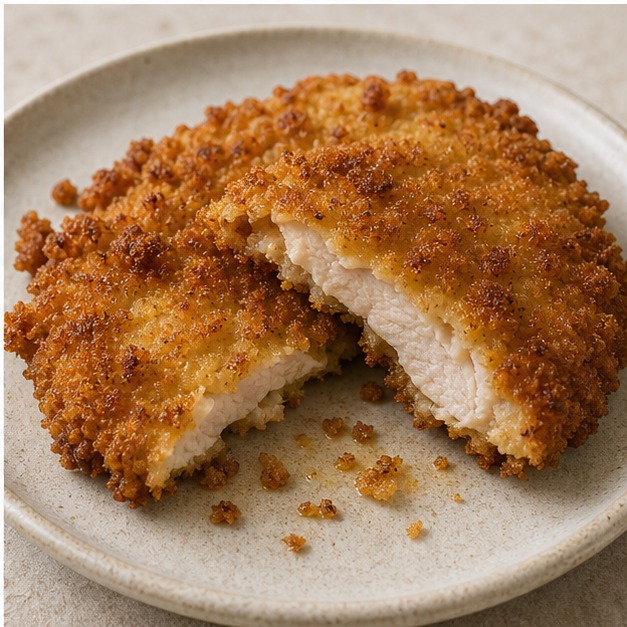
Heat and Texture
Frying Without Greasy Crusts
Use batter, heat, and draining strategy to get crispy texture without oil-heavy mouthfeel.
- Chicken pieces, vegetables, fish, and vegetarian fritters.
- Crispy sides and quick deep-fry applications.
- Recipes where texture matters more than seasoning carry.
Step 1
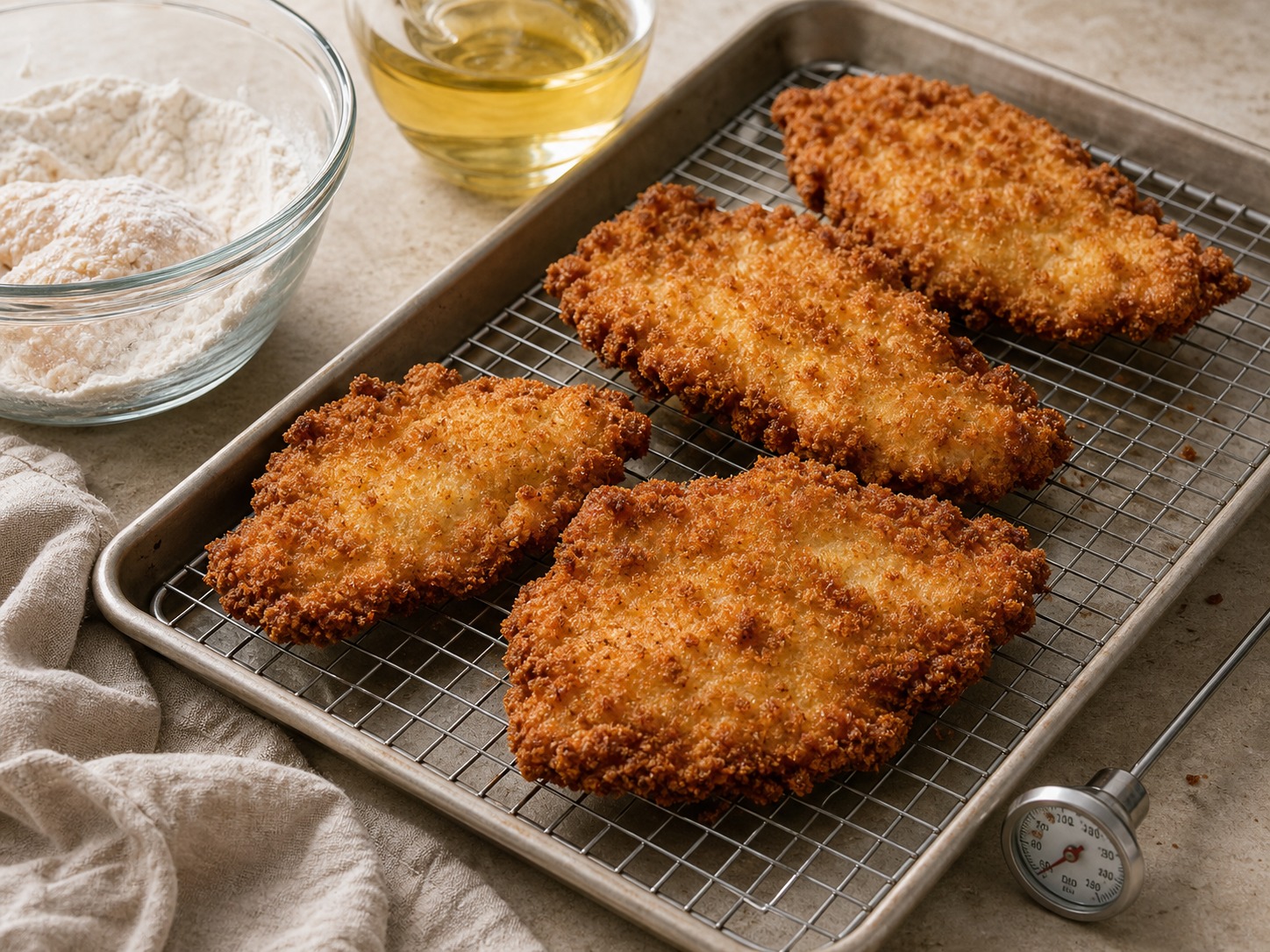
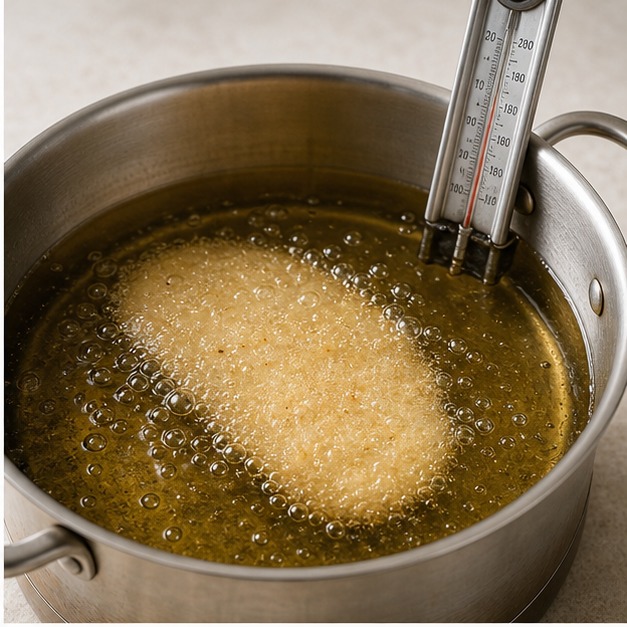
Oil quality and heat discipline
Oil must be hot enough to set the outer layer quickly but not so hot it burns the coating. If coating burns while center is uncooked, lower your oil range and increase thickness precision.
Use a consistent frying temperature and avoid constant refills that change oil depth and thermal behavior.
Step 2
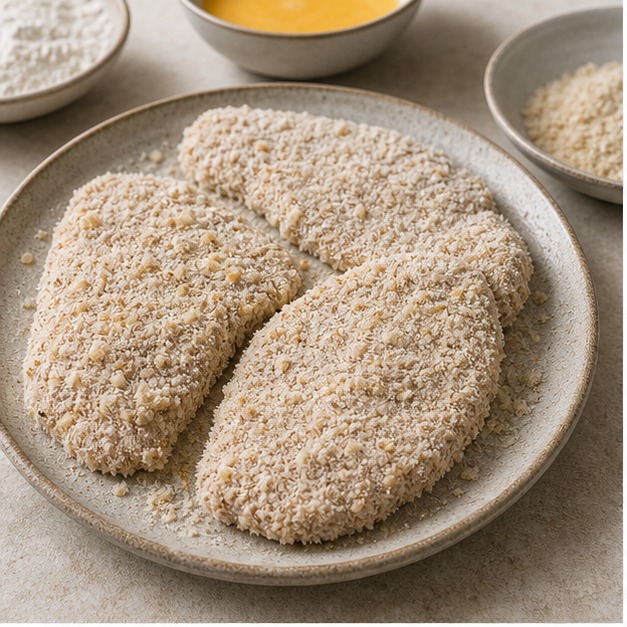
Coating architecture
Coating ratios control how much oil the final crust absorbs. Too heavy a batter creates a shell that traps steam; too light a coat gives a weak crunch.
Rest coated food before frying so the outer layer binds evenly and forms a tighter cell structure.
Step 3
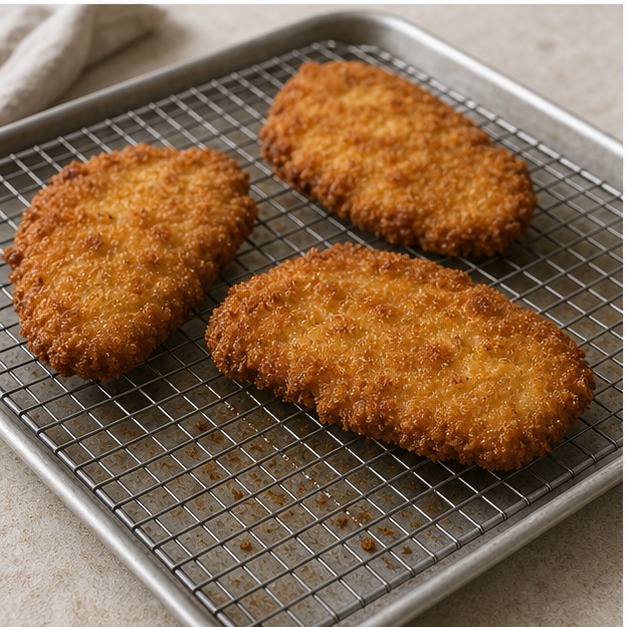
Drain and steam release
A draining stage on rack time is not decoration. It allows steam to vent and prevents soggy bottoms. Paper towels remove surface oil only after the piece cools slightly.
If texture is still soft after draining, you likely used too little resting post-fry or too low oil depth.
Step 4
Correct after serving
Fried food should have seasoning that hits immediately but doesn’t compete with crispness. Salt early if dry-basting is intentional; salt at serve to preserve crust integrity and hydration balance.
Tie this to related recipes for fish, chicken, and vegetable pages so users return to the same method repeatedly.